
When a Cleveland homeowner finds a water stain near their fireplace or on a ceiling that shares a wall with the chimney, the roof itself often gets blamed first. But one of the most common sources of that leak isn’t the roofing material at all — it’s the chimney flashing, the metal strips that seal the joint where the chimney meets the roof. Flashing takes more abuse than almost any other part of the roof system, and when it fails, the leak can look exactly like a roofing problem while the actual fix is somewhere else entirely.
What Chimney Flashing Actually Does
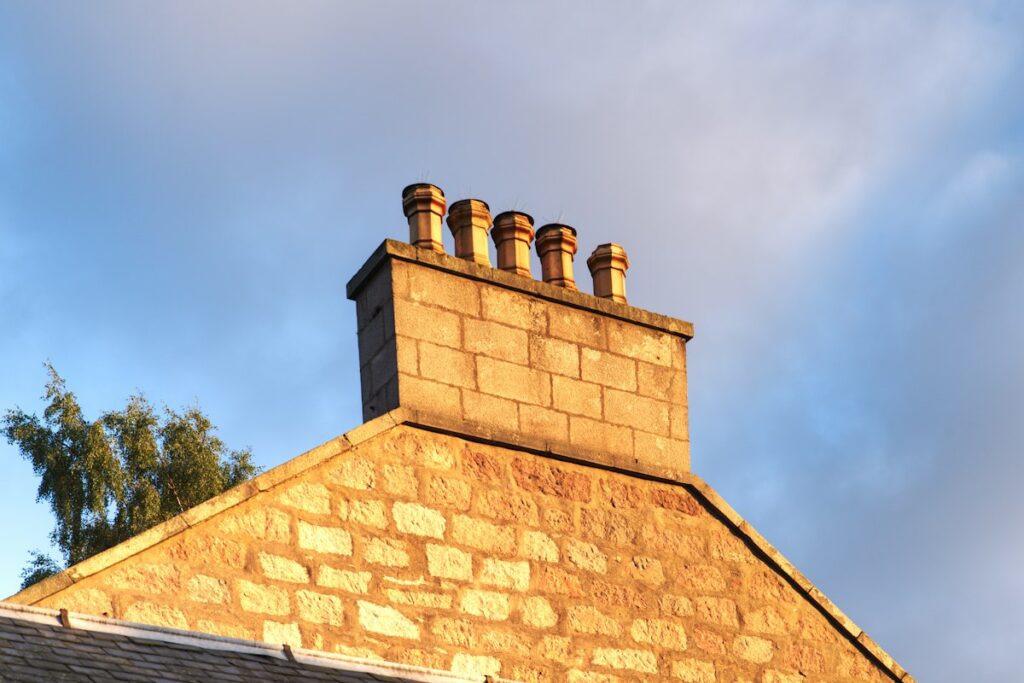
A chimney interrupts an otherwise continuous roof surface, and flashing is what seals that gap. A proper installation uses two layers: step flashing, which is woven into the roofing material course by course along the sides of the chimney, and counter-flashing, which is embedded into the chimney’s mortar joints and folds down over the step flashing. Together they create a two-part barrier that sheds water even as the roof and chimney expand and contract at different rates through Cleveland’s seasonal temperature swings.
Why Flashing Fails in Cleveland’s Climate
Northeast Ohio is hard on flashing specifically because of how often we cycle through freeze and thaw. A few patterns show up again and again on older Cleveland chimneys:
- Deteriorated sealant — the caulk or roofing cement at the counter-flashing joint dries out and cracks after a few winters, opening a direct path for water.
- Rusted or corroded metal — older flashing, especially galvanized steel, rusts through over time and simply stops shedding water.
- Flashing pulled loose from mortar joints — freeze-thaw cycles can work counter-flashing loose from the chimney masonry it’s embedded in.
- Improper original installation — flashing that was sealed with caulk instead of properly woven and embedded tends to fail years earlier than it should.
- Ice dam damage — ice backing up at the chimney during winter storms can lift and bend flashing that would otherwise be fine.
Signs Your Chimney Flashing Is Leaking
Flashing leaks tend to show up in specific, recognizable ways: water stains on the ceiling or wall nearest the chimney, discoloration on the attic decking directly around the chimney chase, a musty smell near the fireplace after rain, or visible rust streaks and gaps at the base of the chimney from the ground or a ladder. If you’ve already ruled out the roof shingles themselves as the source — see our roof repair vs. replacement guide for how to evaluate that — flashing is one of the next places to check.
Flashing Repair vs. Chimney Replacement
Most flashing leaks are a repair, not a full chimney job — reseating or replacing the flashing and properly sealing the counter-flashing joint solves the majority of cases. But flashing problems are sometimes a symptom of bigger chimney issues: crumbling mortar, a deteriorating chimney crown, or masonry that’s shifted enough that flashing can no longer seal properly against it. We cover how to tell the difference in more detail in our chimney repair vs. replacement guide. The only way to know for sure which situation you’re in is a hands-on inspection.
Don’t Ignore a Small Leak
A flashing leak that seems minor rarely stays that way. Water that gets past flashing doesn’t just stain a ceiling — it can saturate roof decking, damage insulation, and eventually lead to the kind of interior drywall damage we cover in our drywall repair guide. Catching and fixing a flashing leak early is almost always cheaper than repairing the damage it causes if it’s left alone through a full Cleveland winter.
Why Cleveland Homeowners Work With ARC
ARC Roofing & Home Improvement has served Northeast Ohio since 1985, and chimney flashing is one of the areas where experience with local weather really shows — we know how our freeze-thaw cycles specifically attack flashing and mortar joints. We inspect the full picture, not just the visible leak, and back our work with a transferable lifetime warranty.
Noticing a stain near your fireplace or chimney? Contact ARC Roofing & Home Improvement for a free, no-obligation inspection.