
After a few heavy Cleveland snowstorms back to back, it’s a fair question to ask: how much snow can your roof actually hold before it becomes a problem? Most homes are built with a solid safety margin, but a string of lake effect events or a wet, heavy snowpack can push an aging or already-stressed roof closer to its limit than homeowners realize. Here’s how snow load actually works, and how to tell if your roof needs a closer look this winter.
How Roofs Are Rated for Snow Load
Building codes assign every region a “ground snow load” rating, measured in pounds per square foot, based on historical snowfall data. Roofs are then engineered with a structural safety margin above that rating. Cuyahoga County and the surrounding Cleveland area typically fall in a moderate-to-higher snow load zone compared to southern Ohio, which is one reason local building codes require roofs here to be built sturdier than homes in warmer climates. A roof built to current code, in good repair, is designed to handle a typical Cleveland winter without structural concern — the risk comes from older roofs, roofs with existing damage, or additions that weren’t engineered to the same standard as the rest of the house.
What a Few Feet of Snow Actually Weighs
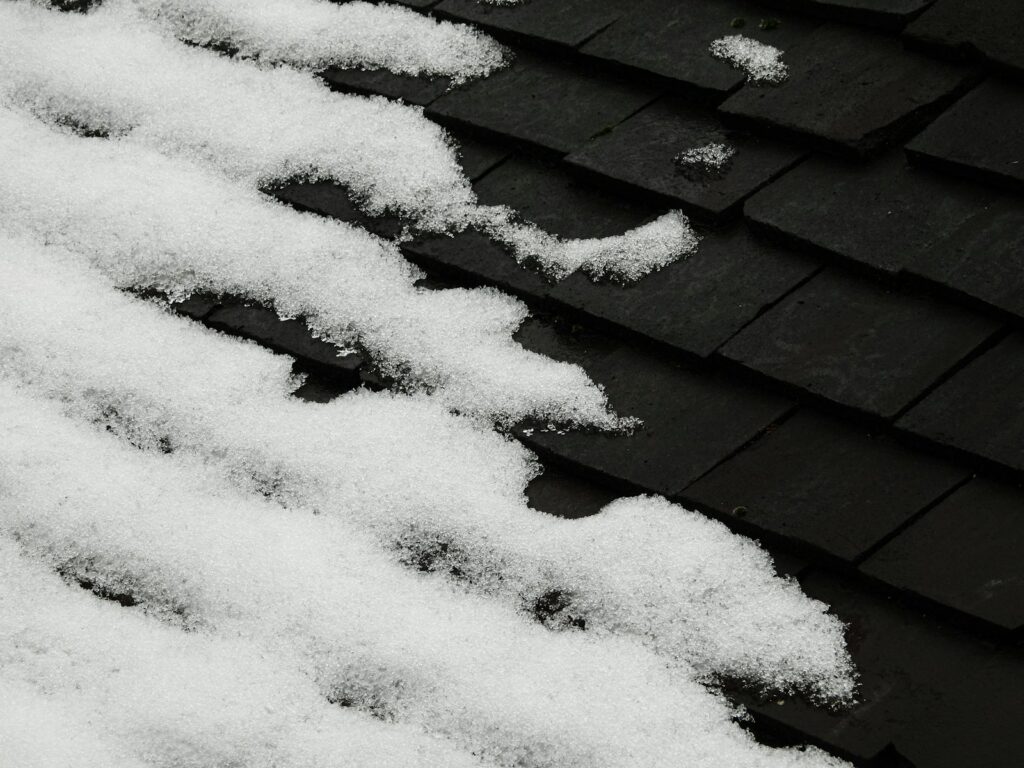
Not all snow weighs the same. Fresh, powdery snow can weigh as little as 3 to 5 pounds per cubic foot, while wet, compacted snow can weigh 15 to 20 pounds per cubic foot or more — and ice weighs more still. That means two feet of light, fluffy snow might add a modest load to your roof, while two feet of wet, dense snow sitting on top of an existing layer of ice can add thousands of pounds of total weight across a typical roof surface. This is exactly why repeated lake effect snow events are more concerning than a single storm: each new band adds weight on top of snow that hasn’t had a chance to melt, compact, or slide off.
Signs Your Roof Is Carrying Too Much Weight
- A sagging or bowed roofline — visible dips, especially along the ridge or in the middle of a roof section, are a sign to call a professional right away.
- Cracking, popping, or creaking sounds — especially from the attic or ceiling, which can indicate the structure is under more stress than usual.
- Doors or windows that won’t open or close properly — a sign the frame of the house may be shifting slightly under roof load.
- Cracks forming in drywall or around door frames — another structural stress indicator worth having checked.
- Large icicles or visible ice buildup at the eaves — often paired with heavy snow load and a sign an ice dam may be forming too.
Any one of these on its own may not be an emergency, but if you notice more than one together, it’s worth having your roof inspected before the next snow event adds more weight.
Factors That Increase Risk
Certain roofs carry more risk than others, even in the same storm. Older roofs that are past or nearing the end of their expected lifespan have less structural reserve than a newer roof. Flat or low-slope roof sections — common over porches, additions, and garages — don’t shed snow as easily as a steep pitched roof and tend to accumulate more weight. Homes that have gone through several lake effect snow events in a row without a thaw in between are also at higher risk, since each additional band adds weight before the last one has a chance to settle or melt off.
What to Do If You’re Worried About Snow Load
Never climb onto a snow-covered roof to check it yourself — it’s one of the most dangerous things a homeowner can do in winter, and it’s not necessary. A roof rake used from the ground can safely remove snow from lower roof edges without putting you at risk. For anything beyond that, or if you’re seeing any of the warning signs above, it’s worth having a professional take a look. A free roof inspection can tell you whether your roof is handling the season well or whether it needs attention before the next storm.
Why Cleveland Homeowners Work With ARC
ARC Roofing & Home Improvement has been helping Cleveland-area homeowners get through tough winters for years, from routine inspections to emergency response when a roof is showing signs of real stress. We know what a healthy Cleveland roof looks like in January, and we know what warning signs mean it’s time to act. If this winter has you wondering how your roof is holding up, we’re happy to take a look.
Concerned about snow load on your roof? Contact ARC Roofing & Home Improvement to schedule a free inspection.