
There’s nothing quite like the first fire of the season on a cold Cleveland night. But before you light up the fireplace, it’s worth taking a few minutes to make sure your chimney is actually ready for use. A chimney that’s been sitting unused since last spring can develop issues you won’t notice until you’ve already got a fire going — and some of those issues double as roof problems, since your chimney is part of your roof system.
Why a Pre-Season Chimney Check Matters
Chimneys take a beating from Cleveland weather year-round — freeze-thaw cycles, heavy rain, and snow all take a toll on the masonry, flashing, and cap. Add in a summer’s worth of birds, leaves, and debris that can find their way into an unused flue, and it’s easy to see why fire safety organizations recommend having your chimney inspected annually, ideally before the first fire of the season rather than after a problem shows up.
Chimney Safety Checklist Before Your First Fire
- Schedule a chimney sweep if it’s been over a year. Creosote buildup inside the flue is one of the leading causes of chimney fires, and a professional sweep clears it out safely.
- Check the damper opens and closes fully. A damper that’s stuck or doesn’t seal well affects both fire performance and winter energy loss when the fireplace isn’t in use.
- Look for cracks in the masonry or flue liner. Cracked mortar joints or a damaged flue liner can let heat and sparks reach areas they shouldn’t.
- Inspect the chimney cap and spark screen. A missing or damaged cap lets rain, snow, and animals into the flue, and lets sparks out onto your roof.
- Clear the area around the fireplace. Keep anything flammable at least three feet away, and make sure your carbon monoxide detector has fresh batteries.
If you can check off this list, you’re in good shape for the season. If something looks off, it’s worth having a professional take a closer look before you use the fireplace.
What a Damaged Chimney Can Mean for Your Roof
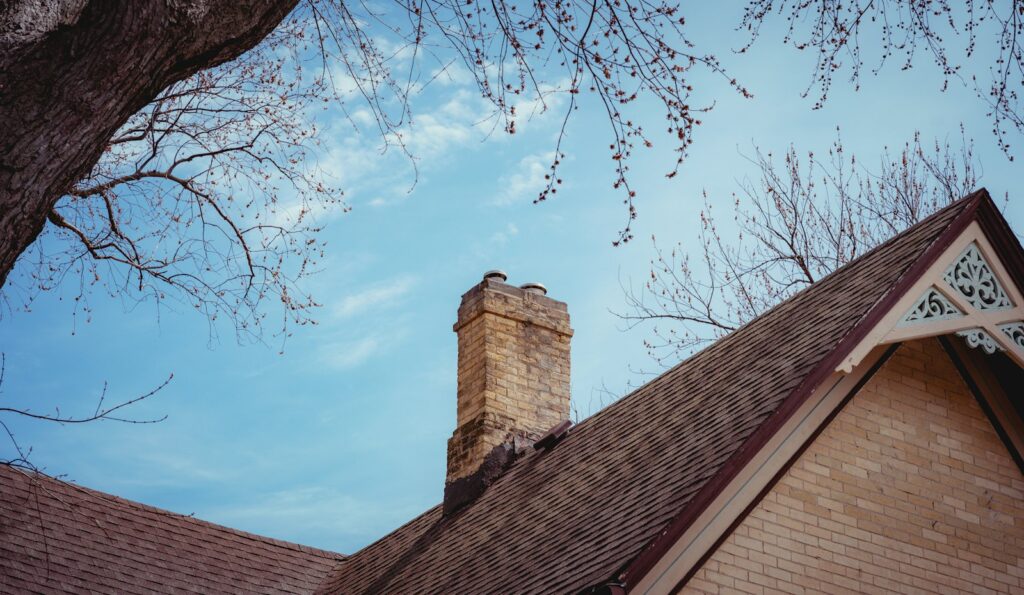
It’s not just fire safety at stake — a chimney in poor condition is also one of the most common sources of roof leaks we see across Cleveland homes. The flashing where the chimney meets the roof is a frequent weak point, especially on older homes, and once it fails, water can work its way into the attic and ceiling long before you notice a problem inside the fireplace itself. We cover this in detail in our guide to chimney flashing leaks and the hidden cause of roof leaks — it’s worth a read if your chimney is more than a few years past its last inspection.
Signs Your Chimney Needs a Professional
Some chimney issues are a quick fix, while others point to a bigger problem. White staining on the masonry (called efflorescence), a leaning or visibly damaged chimney crown, crumbling mortar, or recurring leaks around the chimney are all signs it’s time for a professional evaluation — not just a sweep. Our guide on chimney repair vs. replacement warning signs walks through how to tell which situation you’re dealing with.
Why Cleveland Homeowners Work With ARC
Chimneys and roofs go hand in hand, and ARC Roofing & Home Improvement handles both. Whether it’s chimney flashing, masonry repair, or a full chimney tear-down and rebuild, we make sure the work is done right so you can enjoy a fire this winter without worrying about what’s happening above it. If you’re not sure where your chimney and roof stand heading into the cold months, a free roof inspection covers both.
Ready to get your chimney and roof checked before your first fire? Contact ARC Roofing & Home Improvement today.